Mount Zion and King David’s Tomb: Exploring Sacred Jerusalem
Discovering the Significance of Mount Zion
Jerusalem is a city where history, faith, and tradition come together at nearly every turn. Among its most meaningful locations is Mount Zion, a hill just outside the traditional walls of the Old City. For centuries, Mount Zion has been associated with important events and traditions connected to Judaism, Christianity, and Islam.
The name Mount Zion appears frequently in the Bible and has become a powerful symbol of Jerusalem itself. While the exact boundaries of biblical Zion have changed through different historical periods, the hill known today as Mount Zion became an important religious destination. Visitors come here not only to see ancient sites but also to experience the spiritual atmosphere that surrounds one of Jerusalem's most historic areas.
The Historical Importance of King David
King David is one of the best-known figures in biblical history. Traditionally regarded as the second king of ancient Israel, David is remembered for establishing Jerusalem as his capital and for his role as a central figure in the history of the Israelite kingdom.
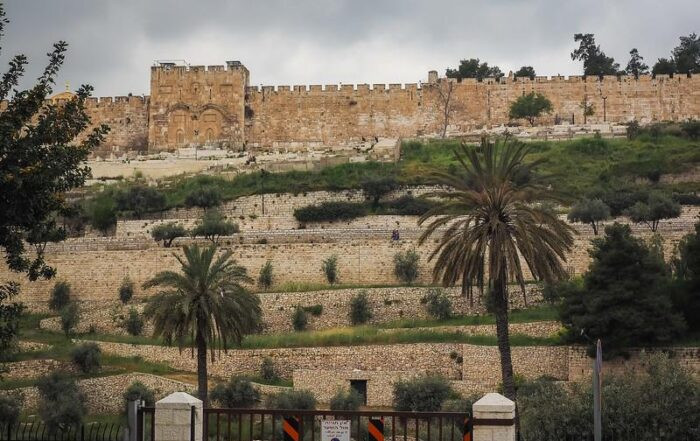
According to biblical tradition, David ruled Jerusalem and transformed it into an important political and religious center. His connection with the city has remained influential for thousands of years, making locations associated with his life and burial especially significant to visitors.
One of the most famous traditions connected with Mount Zion is King David's Tomb. Although historians and archaeologists debate whether the present site is actually the burial place of the biblical King David, the location has held deep religious importance for generations.
Visiting King David's Tomb
King David's Tomb is located on Mount Zion in a historic stone building. The site contains a simple memorial structure covered by a decorative cloth, where visitors traditionally come to pray, reflect, or learn about David's legacy.
The tomb's present identification developed over centuries rather than being established through definitive archaeological evidence. Nevertheless, its religious significance is undeniable. Jewish visitors have traditionally regarded the location as a sacred place of prayer, while travelers from around the world visit to understand the traditions surrounding one of the Bible's most famous kings.
The atmosphere around the tomb is generally quiet and respectful. Visitors should remember that this is an active religious site, so modest clothing and considerate behavior are appropriate.
Mount Zion Beyond the Tomb
Mount Zion offers much more than one historic site. The hill is home to several locations that reflect Jerusalem's diverse religious heritage. Nearby stands the Dormition Abbey, a prominent Christian landmark traditionally associated with the death or dormition of Mary.
Another important location is the traditional site of the Upper Room, associated by Christian tradition with the Last Supper and other events described in the New Testament. The building and its history reflect the many layers of Jerusalem's past, with architectural influences from different periods.
Exploring these locations together allows travelers to appreciate how Mount Zion became a meeting point for different traditions. Ancient religious memories, medieval architecture, and modern pilgrimage all contribute to its distinctive character.
Why Mount Zion Matters to Jewish Heritage
For Jewish heritage, Mount Zion carries powerful symbolic importance. The biblical concept of Zion is deeply connected with Jerusalem, the Temple, the people of Israel, and hopes for restoration. Over time, Zion became both a geographical reference and a spiritual symbol.
The traditional association of King David with the hill adds another important dimension. David's connection with Jerusalem remains central to Jewish history and biblical tradition, while the tomb attributed to him provides visitors with a tangible place connected to that heritage.
Standing on Mount Zion can therefore be more than a sightseeing experience. It can offer an opportunity to consider the historical development of Jerusalem and the enduring traditions that have shaped the city.
A Meaningful Stop for Christian Pilgrims
Mount Zion also has a special place in Christian pilgrimage. Several important Christian traditions are concentrated within a relatively small area, making the hill an interesting destination for travelers exploring biblical Jerusalem.
The Upper Room, nearby churches, and historic streets create an environment where visitors can connect biblical narratives with the geography of the ancient city. Christian pilgrims often include Mount Zion in wider journeys through Jerusalem, visiting locations associated with the life, ministry, death, and resurrection of Jesus.
For those interested in biblical history, the area also demonstrates how traditions can develop and evolve over many centuries. Some sites have strong historical or archaeological evidence, while others are preserved primarily through longstanding religious tradition.
Exploring the Layers of Jerusalem's Past
One of the most fascinating aspects of Mount Zion is its layered history. Jerusalem has been rebuilt, expanded, destroyed, and transformed many times. As a result, the city's religious landmarks often represent multiple historical periods.
King David's Tomb is a good example of this complexity. The site is revered according to tradition, yet its precise historical identification remains uncertain. Understanding this distinction does not make the visit less meaningful. Instead, it demonstrates how memory, faith, archaeology, and history interact in Jerusalem.
Travelers who approach Mount Zion with an open mind can appreciate both the traditions preserved by generations and the questions that historians continue to investigate.
Planning a Visit to Mount Zion
A visit to Mount Zion can easily be combined with other attractions in and around Jerusalem's Old City. Because the area contains several religious sites, travelers should allow enough time to explore rather than treating it as a quick stop.
Comfortable walking shoes are useful because Jerusalem involves considerable walking on stone streets and uneven surfaces. Visitors should also check current opening arrangements for individual religious sites, as access can vary according to religious observances, holidays, and local conditions.
Most importantly, travelers should approach King David's Tomb and surrounding sacred locations respectfully. These are not simply tourist attractions; they remain meaningful places of worship and pilgrimage.
The Enduring Legacy of Mount Zion
Mount Zion continues to attract pilgrims, historians, and curious travelers because it represents so many aspects of Jerusalem's identity. Its connection with biblical traditions, King David, Christianity, and Jewish heritage makes it one of the city's most compelling destinations.
While the precise historical location of David's burial cannot be established with certainty, King David's Tomb remains an important traditional landmark. Together with the other sacred sites on Mount Zion, it provides a window into the long and fascinating history of Jerusalem.
For anyone seeking to understand the city's spiritual character, a journey through Mount Zion offers an unforgettable opportunity to explore how faith and history have shaped Jerusalem across thousands of years.


Comments
Post a Comment